
The Recovery Hierarchy: Why Massage Isn't the Whole Answer
As a massage therapist, this might sound like a strange thing to say:
Massage isn't the most important part of recovery.
Don't get me wrong, I genuinely believe massage is a valuable tool. It's why I started in this field and why I've invested my time learning and practising it. But with over 13 years working in the fitness industry, I've learnt that the things that make the biggest difference to how our bodies feel are often the simplest.
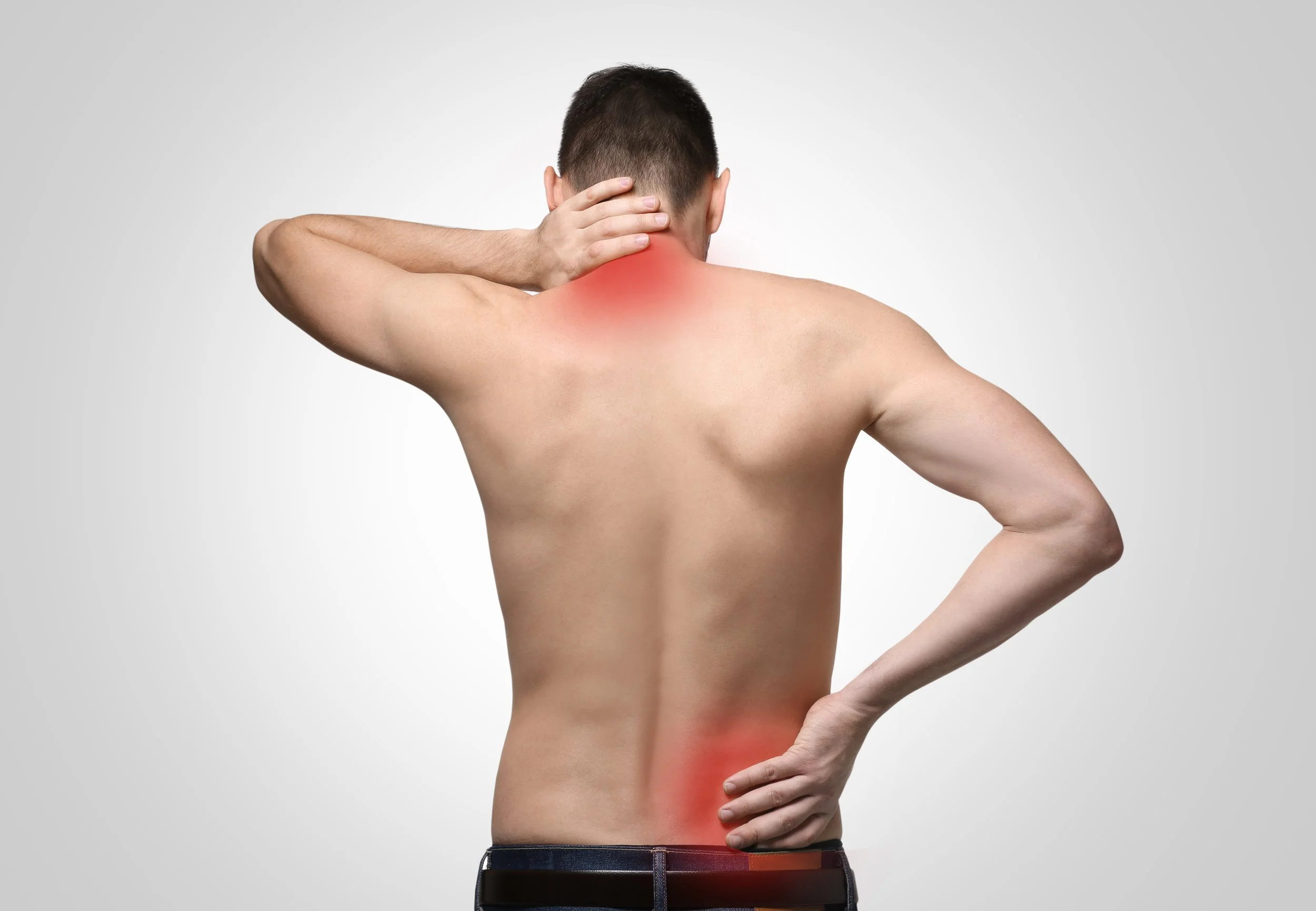
Many people are looking for that weird ‘trick’ or massage technique that will fix their tight shoulders, sore back or stiff hips, and don't even get me started on the whole ‘breaking up scar tissue in one session’ mantra.
But usually, there isn't one thing.
Recovery is rarely about finding the perfect treatment. More often, it's about building habits that support you consistently over time.
That's where the Recovery Hierarchy comes in.
The Recovery Hierarchy is a simple way of thinking about the factors that influence how we feel and move day to day. Rather than focusing on quick fixes, it encourages us to look at the bigger picture.
Recovery is rarely the result of one thing. It's usually the combination of several factors working together over time:
Regular movement
Strength and physical capacity
Sleep
Stress management
These foundations influence how we recover, how we tolerate physical demands, and how resilient we feel in everyday life.
Higher up the hierarchy are tools such as massage and bodywork.
That doesn't mean massage isn't important. It simply means that massage works best when it's supporting a solid foundation rather than trying to replace one.
For example, a massage may help someone feel less stiff after sitting at a desk all week. But if they're still spending ten hours a day in the same position, sleeping poorly, and rarely moving, the benefits are often short-lived.
On the other hand, when massage is combined with regular movement, good sleep habits, and appropriate exercise, it becomes a valuable asset in a broader recovery strategy.
Another benefit that often gets overlooked is the opportunity to slow down.
Many people spend their days rushing from one responsibility to the next. Work deadlines, family commitments, exercise, appointments, emails, and everything else life likes to throw at us can make it difficult to switch off.
Sometimes the most valuable part of a massage isn't a particular technique; it's having an hour where you're not expected to do anything at all.
The goal of the Recovery Hierarchy isn't to tell you that one approach is right and another is wrong.
It's simply a reminder that recovery isn't one thing.
It's the habits you repeat every day, the way you manage stress, the way you move your body, the quality of your sleep, and the time you make for yourself.
Massage is one part of that picture.
Not the whole picture.
But an important one.
Why I created the recovery hierarchy.
Over the years I've worked with competitive athletes, office workers, parents, first responders, and people simply trying to feel better in their bodies. Despite their different backgrounds, I kept coming back to the same observations.
The people who seemed to cope best with the demands of life weren't necessarily the ones with money, or the latest recovery gadget or mobility routine. More often, they were people who understood their own bodies and had learnt how to look after themselves, both mentally and physically.

They moved regularly, had strategies for managing stress, and made time for themselves when life allowed. None of these things were particularly complicated, but they were often the habits that made the biggest difference.
The Recovery Hierarchy grew from those observations. It's not a scientific model, and you won't find it published in a journal article. It's simply a practical framework that helps me think about the different factors that influence how we feel, function, and recover.
So what does the recovery hierarchy look like?
Recovery is rarely the result of a single treatment, exercise, or habit. It's usually a combination of factors working together over time.
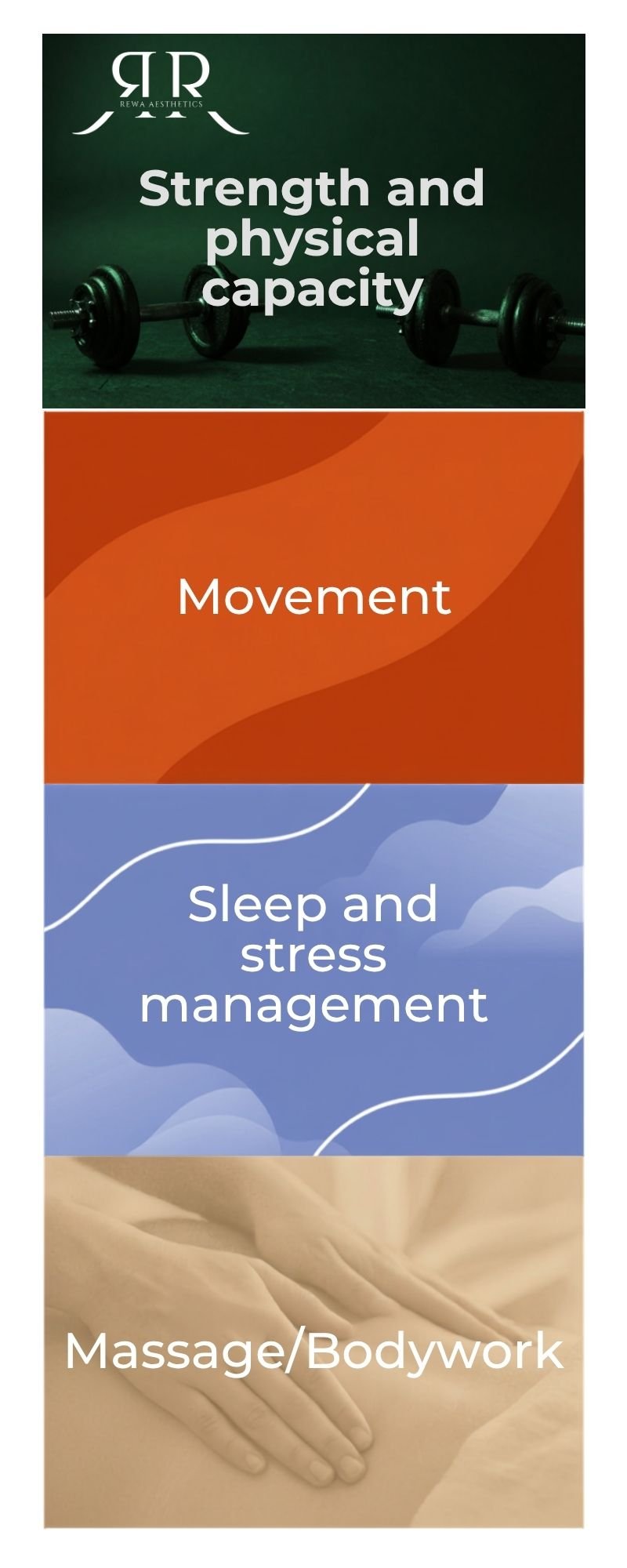
The visual to the left is the Recovery Hierarchy. It's simply a way I think about the different factors that contribute to recovery and wellbeing. It's not intended to rank one strategy above another or suggest that one approach is "better" than the others. Instead, it highlights the different layers that I believe can influence how we feel and function in everyday life. The attention each layer requires will depend on where you are in life.
Strength & Physical Capacity

Strength and physical capacity are a fundamental layer of the Recovery Hierarchy. Over the years, I've competed in both Strongman and Powerlifting at a national level, and one of the biggest lessons I've learnt is that there's a difference between training for competition and training for life.
When you're preparing for a competition, the goal is often to push your body to perform at its highest level. For most people, however, the goal isn't to deadlift enormous weights or carry atlas stones. It's to have the strength and capacity to get through everyday life feeling capable and resilient.
Whether that's lifting a child, carrying groceries, working a physical job, enjoying a weekend hike, or simply getting through a busy week without feeling completely exhausted, building strength can make life's demands feel easier.
Recovery isn't always about doing less. Often, it's about building the capacity to do more.
Movement

I've also spent years working in office environments, so I understand what it's like to spend long periods sitting at a desk.
Modern life often encourages us to sit for most of the day, whether that's working at a computer, commuting, or relaxing in front of a screen. While sitting itself isn't necessarily harmful, spending hours in the same position can leave us feeling stiff, sluggish, and disconnected from our bodies.
Movement doesn't have to mean a gym session or a structured exercise program. Sometimes it's simply getting up from your desk, taking a short walk, stretching between meetings, or finding opportunities to move throughout the day.
I've found that regular movement doesn't just help the body feel better. It often improves energy, focus, mood, and overall well-being as well.
Sleep & Stress Management

If there's one layer of the Recovery Hierarchy I continually find myself coming back to, it's sleep and stress management.
As a parent, I've also learnt that perfect sleep isn't always realistic. Kids get sick, work gets busy, and life happens. That doesn't make sleep any less important; it just means we do the best we can with what we've got.
It's easy to underestimate how much these factors influence how we feel. Poor sleep and chronic stress don't just affect our energy levels. They can impact recovery, mood, concentration, motivation, training performance, and even how sensitive we are to aches and pains.
For many people, improving recovery isn't about finding a new technique. It's about giving sleep and stress management the attention they deserve.
Massage & Bodywork
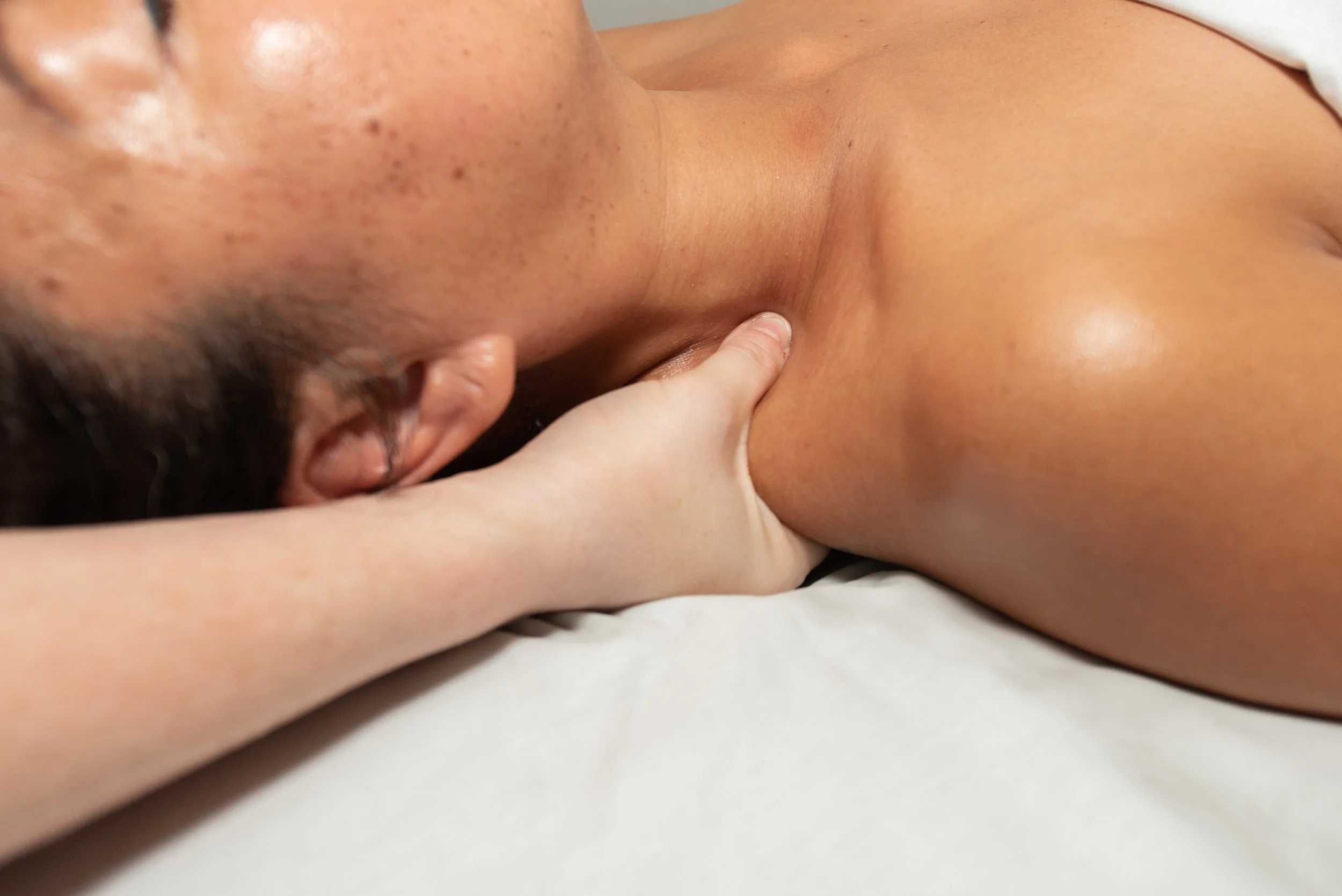
Massage is what ultimately brought all of these ideas together for me.
Through my background in fitness and strength training, I've spent years learning how the body adapts to training, physical demands, stress, and recovery. Massage has given me another perspective on that process.
While I enjoy coaching others, I find myself more often than not advising clients to slow down instead of working harder. Also, let's be honest here, the world doesn't need another strength coach yelling at you to do one more rep.
One of the things I enjoy most about massage is helping people better manage the demands that life places on their bodies. Whether those demands come from training, work, family responsibilities, or simply the accumulation of everyday stress, everyone carries them differently.
Massage isn't about "fixing" people. It's about helping people slow down, reduce feelings of tension, and support their body's ability to cope with the challenges of daily life.
For some people, that's about physical recovery. For others, it's about relaxation. Often it's a combination of both.
Bringing it all together
The goal of the Recovery Hierarchy isn't to convince you that you need to do everything perfectly.
Most of us are balancing work, family, training, responsibilities, and the general chaos that comes with everyday life. Recovery isn't about chasing perfection. It's about paying attention to the factors that support your wellbeing and making small, consistent improvements where you can.
On some days, that might mean prioritizing sleep. Other times, it might mean getting back into a regular strength-training routine, taking more walks, booking a massage, or simply making time to slow down.
Recovery isn't one thing. It's the combination of habits and choices that help you feel and function at your best.
Ash